Your Amazon affiliate platform is live. The tracking works. Products are available. Commissions are set. You may even have a growing list of creators or publishers in the program.
But sales are still sporadic.
This is where many brands start questioning the platform. Should we switch? Add another network? Raise commissions across the board?
Sometimes the technology does need attention. More often, the problem is simpler: the brand has set up the infrastructure for an affiliate channel, but no one is actively building the channel itself.
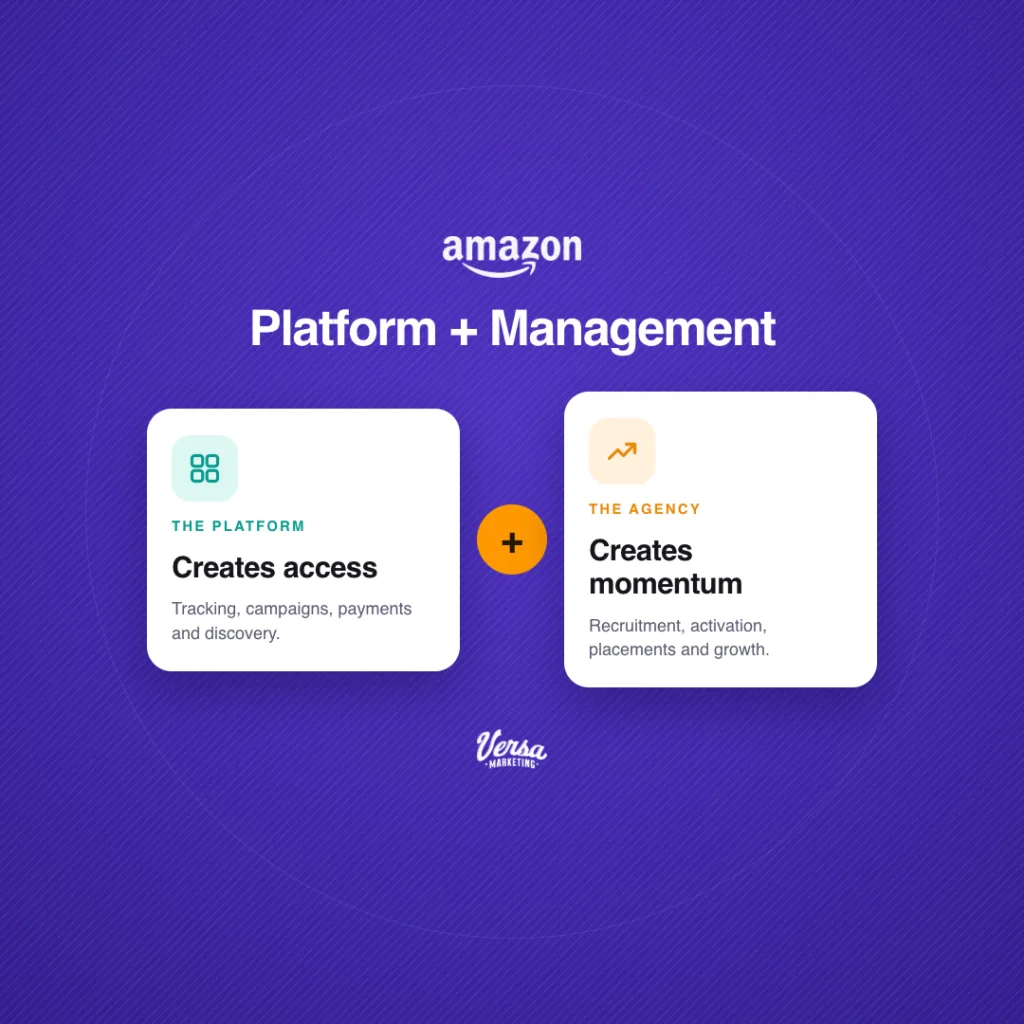
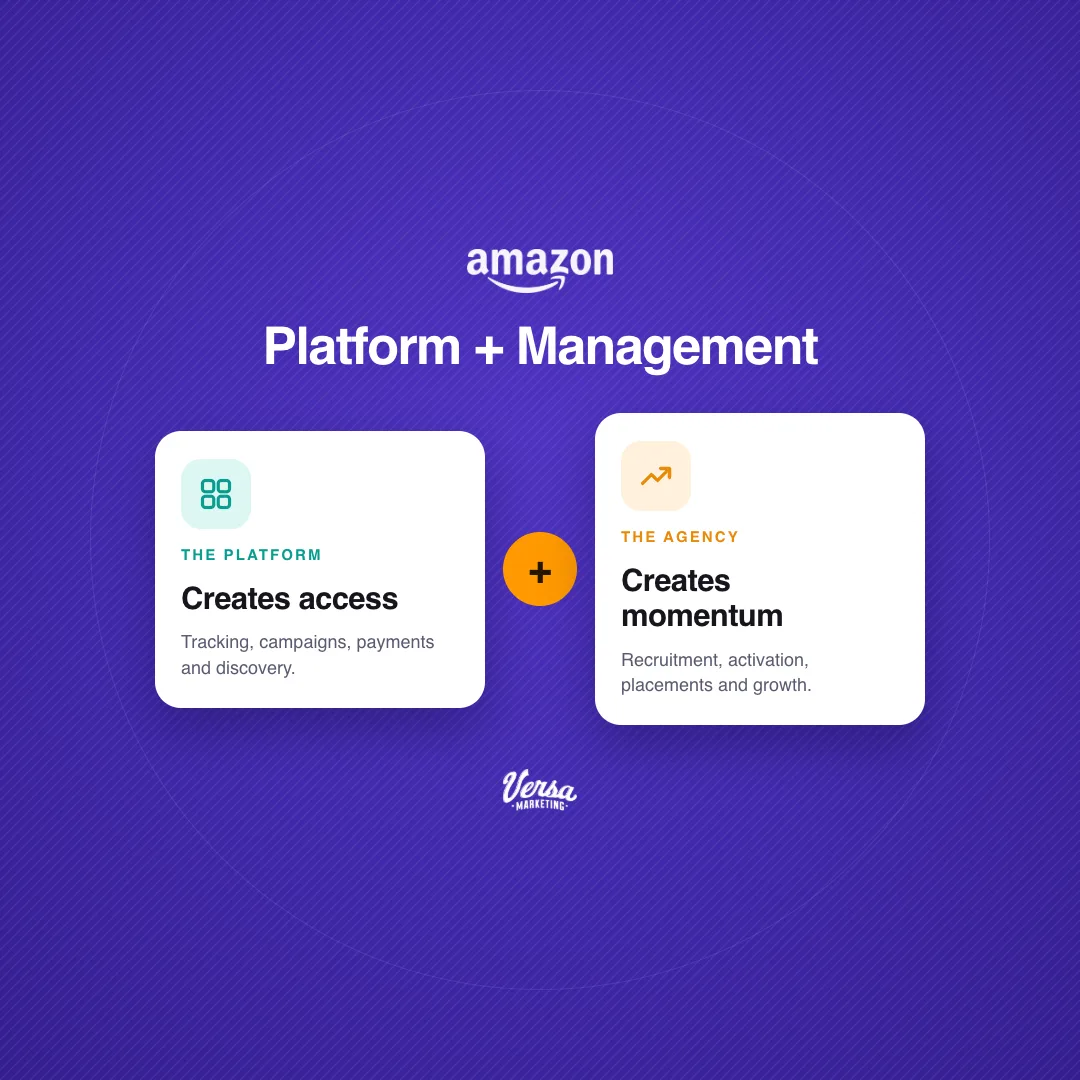
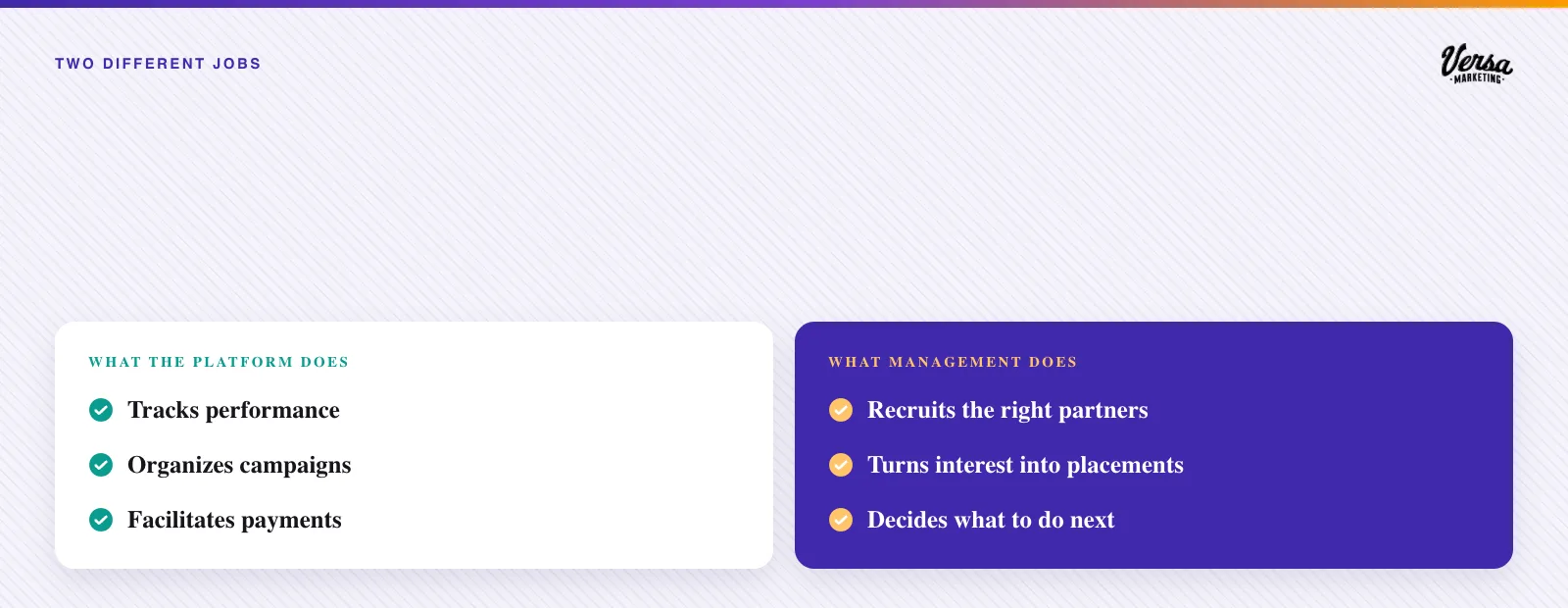
That distinction matters. A platform can track performance, organize campaigns, facilitate payments, and help brands discover partners. An Amazon affiliate agency is responsible for turning those capabilities into the decisions, relationships, placements, and ongoing activity that produce growth.
You need both. Asking software to do the work of management is where promising Amazon affiliate programs often stall.
Platforms are becoming more capable, not less important
Amazon describes Creator Connections as a marketplace that connects brands with Amazon creators. Brands can select products, set campaign terms, and make commission-based opportunities available to participating partners. Third-party platforms add another layer of infrastructure, including attribution, reporting, payments, marketplace discovery, and program administration.
That infrastructure keeps improving. In August 2026, Levanta expanded its Creator Connections integration with unified reporting, campaign creation, creator messaging, and additional incentive capabilities. For brands, this can make the channel easier to see and manage across programs.
This is good news. Strong technology reduces friction and gives experienced operators better information. But a more capable dashboard does not change the fundamental nature of affiliate marketing: partners choose what to promote, where to place it, and how much attention to give it.
The platform creates access. Management creates preference and momentum.
A platform creates the opportunity. It does not make the opportunity worth choosing.
Creators and publishers are not waiting for a single brand to launch a campaign. They are evaluating many products, offers, content ideas, and commercial opportunities at the same time.
For a marketing leader, the practical question is not whether the program is available. It is whether the right partners see a reason to prioritize it.
That requires judgment. Which products are genuinely compelling? Which business objective matters now: a new product launch, profitable revenue, wider discovery, a seasonal event, or stronger visibility with a specific audience? Where is the brand likely to be credible, and what would make a partner willing to invest time in the opportunity?
A platform can hold the answers a brand enters. It cannot decide which answer makes sense for that brand at that moment.
Marketplace access is not the same as active partner recruitment
An affiliate marketplace can introduce a brand to a large universe of potential partners. That is valuable. But the size of the marketplace is not the same thing as the size of your productive partner base.
Levanta makes this distinction directly in its seller FAQ: its software and creator marketplace facilitate the program, while successful programs still require dedicated affiliate recruitment.
This is one of the most common points of confusion for brands. Joining a network or launching Creator Connections may create visibility among partners, but it does not guarantee that the partners best suited to your product will find the opportunity, understand it, and act on it.
Active management closes that gap. It brings the right opportunity to the attention of relevant publishers and creators, explains why it fits their audience, and keeps the conversation moving until interest becomes real activity.
The exact work is relationship-driven. It cannot be reduced to uploading a product feed or approving everyone who applies.
Participation is not the same as activation
A partner joining a program is a promising signal. It is not the outcome.
The business value appears when content goes live, a product is included in a buying guide, a creator demonstrates it to the right audience, a review helps a shopper compare alternatives, or a deal partner reaches customers ready to buy.
There is often a meaningful distance between enrollment and placement. Products may need to be evaluated. Content calendars may be full. A creator may need a stronger reason to prioritize one product over another. A publisher may see potential but need the opportunity to fit a specific editorial theme or retail moment.
An experienced manager recognizes where promising relationships are stuck and helps move them forward. A platform can record partner status. It cannot build trust or make the placement happen on its own.
Reporting tells you what happened. Management decides what to do next.
Affiliate platforms can provide increasingly useful visibility into clicks, sales, products, partners, and commissions. That information is essential.
But a report is not a strategy.
Someone still has to interpret why one partner is gaining traction while another is not, whether a product has real potential or is simply absorbing attention, when a campaign should be expanded, and when the constraint sits somewhere else in the partnership.
Strong management connects affiliate data to the wider Amazon business. It prevents the brand from treating every slow period as a commission problem or every spike as proof that the program is permanently solved.
Individual placements are not the same as a growth system
One strong article or creator post can produce an excellent result. It can also create a false sense that the program is now self-sustaining.
The more valuable outcome is a channel that keeps developing: new partners entering, productive relationships deepening, priority products receiving attention, and the program staying aligned with launches, promotions, Prime Day, and the brand’s broader Amazon strategy.
That continuity requires ownership. Without it, the program often becomes reactive. The team checks the dashboard when sales rise or fall, refreshes a campaign before a major event, and hopes the marketplace supplies enough activity in between.
A managed program has a different rhythm. Decisions are connected. Relationships carry from one campaign to the next. Lessons from prior placements inform where the brand invests attention. The platform supports that system, but it does not run the system.
What platform-plus-management looks like in practice
Versa’s published Amazon affiliate work shows why this is not an either-or decision.
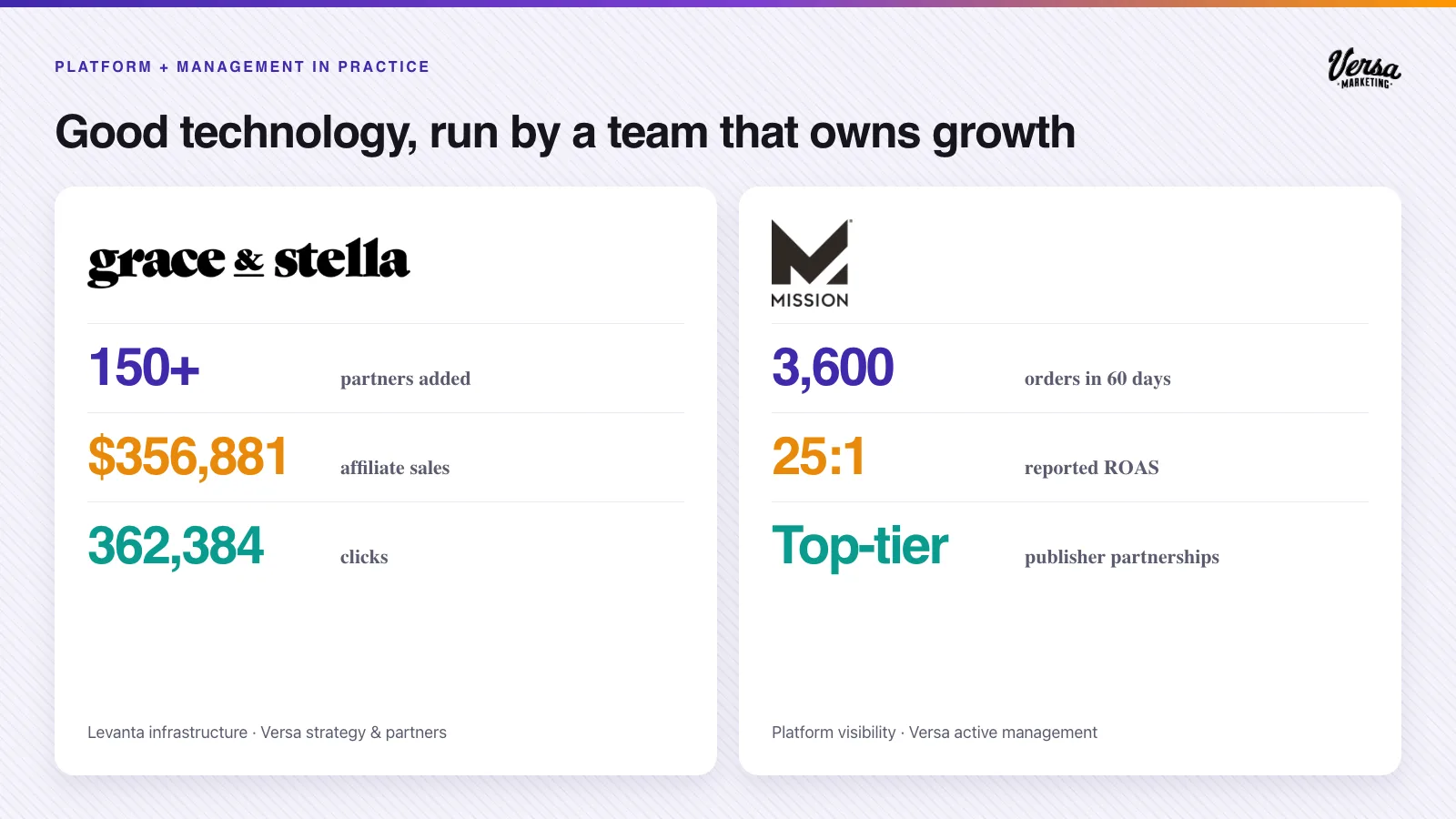
For grace & stella, Levanta supplied the marketplace and tracking infrastructure while Versa managed the affiliate strategy and partner relationships. The program added more than 150 partners and generated $356,881 in affiliate sales across 362,384 clicks during the reported period.
For MISSION, the combination of platform visibility and active agency management supported high-profile publisher partnerships, 3,600 orders over 60 days, and a reported 25:1 ROAS.
The lesson is not that technology matters less. It is that the strongest outcomes come from giving good technology to a team that knows how to use it, owns the relationship work, and remains accountable for channel growth.
Five signs the missing piece is management, not software
- Your program is technically live, but activity depends on the same small group of partners.
- Your team can report clicks and sales, but cannot name the placements or partner conversations expected to drive the next phase of growth.
- Campaigns are created around platform defaults rather than clear business priorities.
- Affiliate work is reviewed periodically, but no one owns recruitment, activation, partner communication, and follow-through every week.
- The first response to weak performance is always a platform change or a broad commission increase.
None of these signals automatically means the current platform is wrong. They mean the brand should first ask whether anyone is doing the work the platform was never designed to own.
The better question is not platform or agency
If you are evaluating an Amazon affiliate program, the choice should not be framed as software versus service. The platform is the infrastructure. The agency is the operating function.
A strong platform should make tracking, administration, discovery, and reporting easier. A strong Amazon affiliate agency should make better decisions, build productive relationships, create partner activity, and keep the channel moving toward the brand’s business goals.
The question we would ask is: who will own the space between launching the program and generating the next meaningful placement?
If the answer is unclear, adding more technology will not fix the ownership gap.
Versa Marketing builds and manages Amazon affiliate programs and Amazon Creator Connections programs for brands that want active partner development rather than a passive campaign. Request a free evaluation and proposal to identify what is limiting growth in your current program.