Amazon affiliate marketing has become one of the most important external growth channels available to sellers selling on Amazon. It gives sellers a way to extend beyond Amazon’s own internal traffic sources, get featured in trusted third-party content, and create a performance-based engine that can support both ongoing revenue growth and major retail moments.
However, the channel has evolved far beyond traditional affiliate programs. Today, success requires navigating a broader ecosystem that includes Amazon Creator Connections and third-party affiliate platforms, each playing a role in how partnerships are built and scaled.
Amazon affiliate marketing is no longer:
- A single tactic
- A single traffic source
- Or a single platform
Instead, it’s a coordinated system of platforms, partnerships, campaigns, and timing. Brands that understand how those pieces fit together can turn affiliate into a meaningful growth channel. Those that don’t often underutilize its potential.
What Is Amazon Affiliate Marketing?
At a high level, Amazon affiliate marketing is a performance-based model in which third-party partners promote products sold on Amazon and earn compensation when their efforts lead to attributed sales.
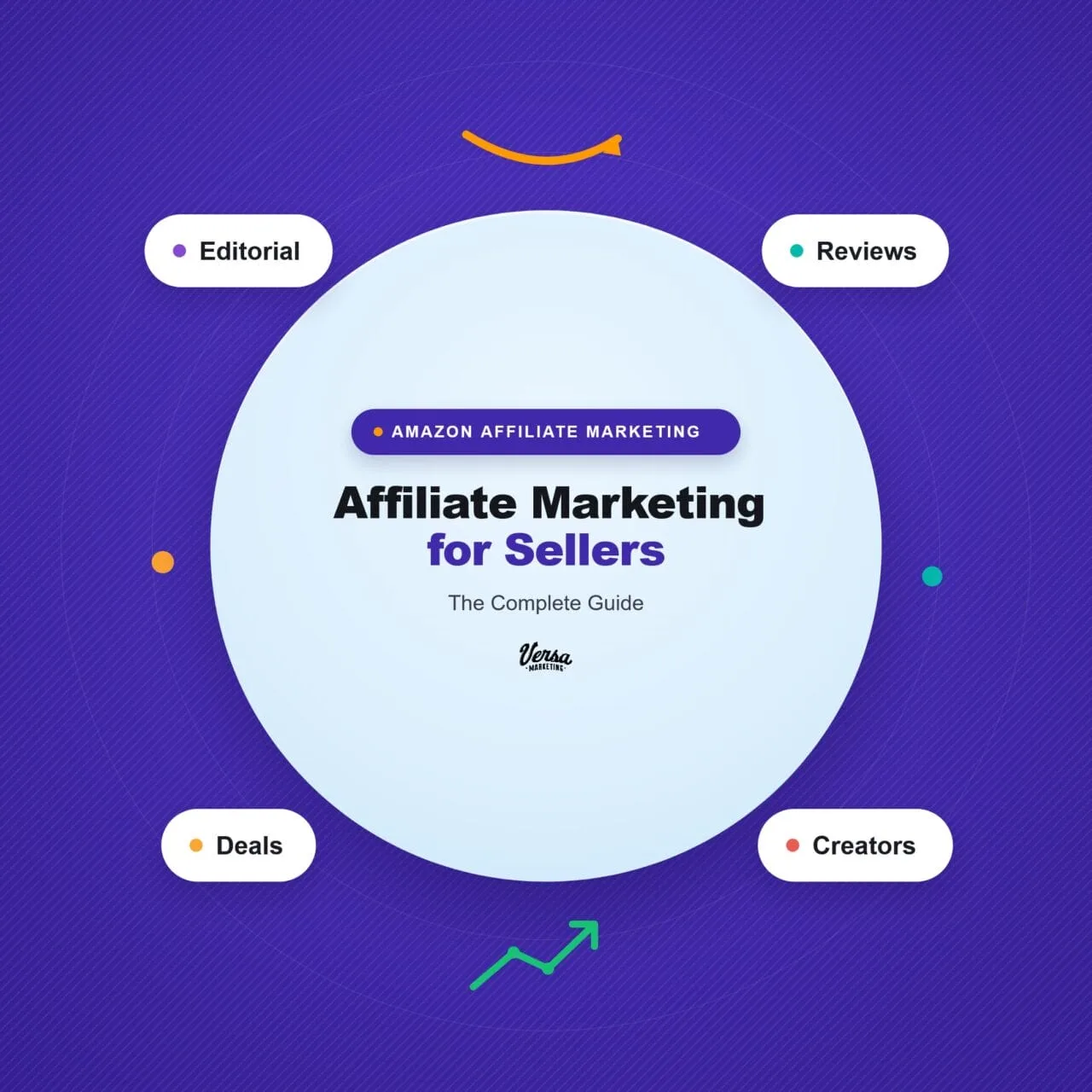
These partners can include:
- Editorial sites and buying guides
- Product review and comparison properties
- Deal and commerce platforms
- Creators and social content publishers
- Blogs, niche communities, and shopping content sites
Affiliate marketing is not just about sending traffic to Amazon. More importantly, it’s about earning placement inside the environments where consumers are actively making purchase decisions.
That could be:
- A “best products” list
- A detailed product review
- A category comparison article
- A seasonal gift guide
- A deal roundup or promotion
Each of these placements puts a product into context which is something that a product listing ad alone cannot do.
Why Amazon Affiliate Marketing Matters More Than It Used To
Amazon affiliate marketing has shifted from a secondary tactic to a core growth channel for many sellers.
It now plays a role in:
- External traffic generation
- Product discovery
- Conversion support
- Incremental revenue
- Event-driven performance
- Best Seller Rank (BSR) uplift
A well-structured affiliate program helps sellers:
- Expand beyond Amazon’s internal ecosystem, reaching customers earlier in their journey
- Show up during product research and comparison, where decisions are actually made
- Align spend with performance, since commissions are tied to sales
- Build momentum over time, as placements and relationships compound
This compounding effect is important. A strong affiliate program is not just a collection of one-off wins. It becomes a repeatable system.
That’s reflected in real-world outcomes. Versa Marketing’s clients have experienced:
- Sustained affiliate-driven growth tied to structured programs
- Strong ROAS and consistent order volume through programs on platforms like Levanta
- Increased BSR through off-channel traffic and sales signals
- Event-driven strategies, like Prime Day, creating both immediate performance and long-term partner momentum
The Modern Amazon Affiliate Ecosystem
One of the biggest misconceptions about Amazon affiliate marketing is that it operates as a single system. In reality, it functions as an ecosystem.
Amazon-Native Infrastructure
Amazon Creator Connections is Amazon’s native affiliate platform. It allows Sellers to create campaigns, set commission rates, and connect with partners directly within Amazon’s environment.
It serves as a foundational layer for many affiliate programs, particularly for Sellers that want a direct connection to Amazon’s own network.
Third-Party Affiliate Platforms
In addition to Amazon-native tools, third-party platforms expand what brands can do. These platforms can provide:
- Amazon attribution tracking capabilities
- More detailed reporting
- Customizable commissions
- Greater flexibility in campaign structure
In practice, many of the strongest programs operate across both:
- Amazon on-platform tools (like Creator Connections)
- External affiliate platforms
Why the Ecosystem Matters
Platform strategy affects nearly every part of the program, including:
- Which partners you can reach
- How campaigns are structured
- What data you can analyze
- How commissions are managed
- How easily the program can scale
Key idea: Amazon affiliate success is not about turning on a tool, it’s about designing the right system.
How Amazon Affiliate Marketing Actually Drives Growth
Amazon affiliate marketing works because it aligns with how people actually shop.
Consumers don’t move directly from discovery to purchase. They:
- Research
- Compare
- Validate
- Then buy
Affiliate placements allow sellers to show up throughout that process.
These placements can take many forms:
- Editorial recommendations
- Review content
- Comparison articles
- Deal features
- Creator-driven content
Each one contributes to a different stage of the purchase journey.
The Role of Timing and Events
Affiliate becomes especially powerful during key retail moments, such as:
- Prime Day
- Holiday periods
- Product launches
- Seasonal demand spikes
During these periods, content consumption and purchase intent increase significantly.
From Versa Marketing’s Prime Day work:
- Brands saw record-breaking lifts in performance compared to baseline sales
- Affiliate participation expanded rapidly during the event
- Relationships built during Prime Day continued into post-event campaigns
Important point: Events don’t just drive short-term spikes, they accelerate long-term growth.
The Core Building Blocks of a Strong Program
A successful Amazon affiliate program is typically built around several coordinated elements.
Platform Strategy
Sellers need to determine how they will operate across:
- Creator Connections
- Third-party affiliate platforms
- Or a combination of both
There is no single correct setup, but a strategy aligned to your goals, objectives and category is foundational.
Program Configuration
Campaign structure plays a significant role in performance. This includes:
- Product selection
- Campaign segmentation
- Promotional alignment
- Clear positioning for partners
Well-structured programs make it easier for partners to understand what to promote and why it matters.
Product Prioritization
Not all products should be promoted equally.
Strong programs:
- Identify high-priority ASINs
- Align promotions with business goals
- Adjust based on seasonality and demand
Commission Strategy
Commission is one of the most important levers in affiliate marketing.
It influences:
- Partner participation
- Speed of engagement
- Placement quality
- Overall competitiveness
In practice, effective commission strategies often include:
- Short-term increases to drive momentum
- Tiered structures based on performance
- Alignment with product priorities
This is reflected in Versa Marketing’s Bio Ionic case study, where commission adjustments and structured incentives contributed to significant growth in affiliate-driven revenue.
Partner Development
Affiliate programs grow through relationships.
This includes:
- Recruiting new partners
- Building ongoing engagement
- Expanding existing partnerships
Rather than being passive, strong programs treat affiliate as an active channel. Although, these relationships can be difficult to identify and develop. Versa Marketing has put in 14 years of building its relationship and can expedite partnership participation and growth.
Placement Strategy
Not all placements are the same.
Different partners contribute in different ways, depending on:
- Content format
- Audience
- Timing
- Product fit
Understanding these nuances helps brands create more effective campaigns and affiliate engagement approaches.
Why Tent-Pole Events Matter So Much
Affiliate marketing often sees its strongest performance during key retail moments.
These include:
- Prime Day
- Holiday shopping periods
- New product launches
- Category-specific demand windows
What drives success during these moments is not just participation, but preparation.
That includes:
- Early partner outreach
- Campaign alignment
- Product readiness
- Commission incentives
In Versa’s Prime Day example, pre-event preparation, such as product seeding and content development, helped ensure placements were already live when demand peaked.
How Amazon Sellers Should Think About Measurement
Affiliate marketing is highly measurable, but it is most useful when viewed as a system rather than a series of isolated results.
Instead of focusing on individual placements, sellers can look at broader patterns:
- Which products consistently attract partner interest
- Which commission structures drive engagement
- Which partners generate repeat performance
- Which campaigns create ongoing momentum
This approach leads to better decision-making over time.
Common Traits of High-Performing Programs
While strategies vary, strong affiliate programs tend to share a few characteristics.
They:
- Have a clear platform strategy
- Prioritize key products
- Use commission as an active lever
- Recruit and engage partners consistently
- Plan around key retail moments
- Focus on placements and partnerships, not just links
Over time, these elements create a compounding effect where performance builds on itself.
Conclusion
Amazon affiliate marketing has become one of the most powerful growth channels available to sellers selling on Amazon.
It offers a way to:
- Drive incremental revenue
- Expand visibility beyond Amazon
- Support key retail moments
- Build long-term partner relationships
At the same time, it requires thoughtful execution. The channel is built on multiple moving parts: platforms, campaigns, commissions, partnerships, and timing.
That complexity is what makes it effective.
Brands that approach affiliate marketing as a structured system rather than a simple tactic are better positioned to unlock its full potential.
If you’re exploring how to build or scale your program with an Amazon affiliate marketing agency, Versa Marketing works with brands to develop structured strategies across Amazon’s affiliate ecosystem, including campaign design, partner recruitment, commission strategy, and ongoing program management.